Ever heard the word “eloper” and wondered what it actually means? This guide breaks down every meaning of eloper, from romance to autism care, in simple words.
The word eloper simply means a person who elopes. It comes from the verb “elope,” which means to run away secretly, often without telling anyone.
The pronunciation is simple: ih-LOH-per. The stress falls on the second syllable, just like the word “elope” with an “-er” added.
Most dictionaries, including Merriam-Webster, define an eloper as “one that elopes.” It’s a short definition, but the real meaning depends heavily on context — and that’s where things get interesting.
Eloper Meaning in Relationships
eloper-meaning-in-relationships
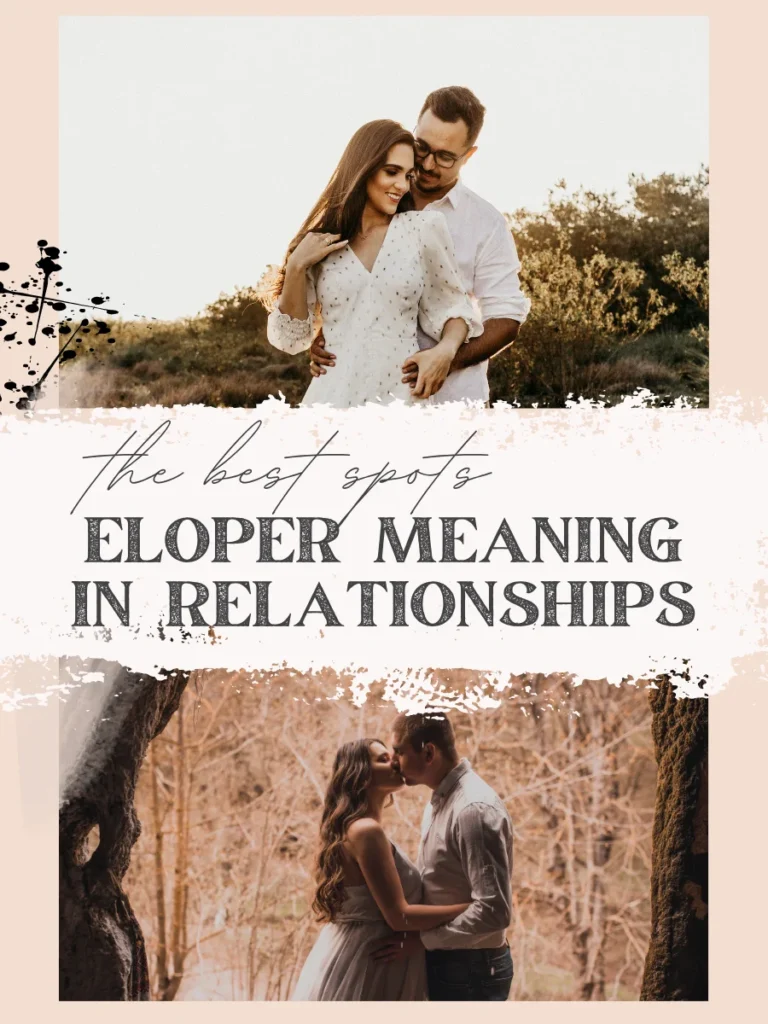
In everyday language, an eloper is someone who runs away with a partner to get married, usually in secret and without a big wedding ceremony.
This is the most common and traditional use of the word. Couples who elope often skip family approval, large guest lists, and traditional venues. They choose privacy and speed over tradition.
Common examples of elopers in relationships:
A young couple driving to another state overnight to marry quietly is an eloper pair. Someone who skips a planned wedding to marry their partner at a courthouse is also an eloper. Historical love stories where couples ran away against their family’s wishes also fit this meaning.
This romantic meaning has existed for centuries and is rooted in old Anglo-Norman and Middle Dutch words meaning “to run away.”
In healthcare, especially in autism care, the word eloper has a completely different and serious meaning.
Here, an eloper is a person — often a child with autism spectrum disorder (ASD) — who leaves a safe or supervised area without permission. This is also called elopement, and it’s a major safety concern for caregivers.
Why is this term used in healthcare?
Children with autism may wander or run away for several reasons. Some chase a desired object or place, like a toy in a store. Others escape overwhelming situations, such as loud or crowded environments. Some simply enjoy the act of running or being chased.
Caregivers and clinics use the term eloper to describe this behavior clinically, without judgment. It helps professionals create safety plans, track patterns, and prevent dangerous situations like a child wandering near traffic or water.
This medical meaning is just as legitimate as the romantic one — it’s simply used in a different setting.
Eloper at School
eloper-at-school
In a school setting, an eloper refers to a student who leaves the classroom, hallway, or school grounds without permission.
This term is especially common in special education settings. Teachers and school staff use it to describe students — often those with autism, ADHD, or other developmental needs — who tend to wander away during school hours.
Schools often build Individualized Education Programs (IEPs) or behavior plans specifically to manage elopement risk. These plans may include alarms on exit doors, one-on-one supervision, or designated safe zones.
Knowing a student is an eloper helps staff stay alert and prevent unsafe situations before they happen.
Is Eloping Linked to ADHD or Autism?
Both ADHD and autism are connected to elopement behavior, but the reasons behind it differ slightly.
Children with autism often elope to seek a specific item, escape sensory overload, or out of pure enjoyment of movement. Children with ADHD may wander due to impulsivity, distraction, or difficulty staying focused on a task or location.
Research shows elopement is more frequently studied and documented in autism, since safety risks tend to be higher. However, ADHD-related wandering is also a recognized concern among parents and educators.
The key difference is the underlying cause — sensory and communication challenges in autism versus impulse control struggles in ADHD.
Elope vs. Elopement vs. Eloper — What’s the Difference?
These three words come from the same root, but each one plays a different grammatical role.
Word
Type
Meaning
Elope
Verb
The action of running away, secretly or without permission.
Elopement
Noun
The event or act of eloping, commonly used in medical and autism-related contexts.
Eloper
Noun (Person)
The person who performs the act of eloping.
Common Synonyms and Related Words
Depending on context, several words can replace or relate to eloper.
Term
Best Used In
Meaning
Runaway
General/medical
Someone who flees a location
Wanderer
Medical/autism
Person who leaves a safe area
Bride/Groom who eloped
Relationship
Person who married in secret
Absconder
Formal/legal
One who leaves secretly to avoid something
These semantically related terms help writers and readers understand the broader vocabulary connected to elopement.
FAQ’s
What does it mean when a child is an eloper?
It means the child tends to wander or run away from a safe, supervised area without permission.
What is the meaning of eloper?
An eloper is a person who elopes, either by secretly marrying a partner or by leaving a safe location without permission.
What is an eloper at school?
At school, an eloper is a student who leaves the classroom or school grounds without staff permission.
What is the meaning of eloped?
Eloped means a person ran away secretly, often to marry someone or to leave a supervised area.
Is eloping ADHD or autism?
Elopement behavior is linked to both ADHD and autism, though it is more commonly studied in autism care.
What is 90% of autism caused by?
There is no single confirmed cause for 90% of autism cases; researchers believe it results from a combination of genetic and environmental factors.
Conclusion
The word eloper carries two very different but equally valid meanings — one romantic, one medical. Understanding both helps readers use the term correctly in any situation.
Ethan Parker is a content editor researching spiritual meanings, biblical symbolism, superstitions, and dream interpretations, delivering clear, accurate, and easy-to-understand explanations for readers.