The word “elope” gets thrown around a lot in wedding conversations, but its actual meaning is often misunderstood. This guide breaks down the real elope meaning, where it came from, and how couples use it today.
What Does Elope Mean?
To put it plainly, elope means to leave home secretly with the goal of getting married, usually without asking parents or family for permission first. That’s the classic answer most people expect.
The deeper idea behind the word is personal choice. Eloping has always been about a couple deciding to marry on their own terms, away from outside pressure.
In current usage, eloping rarely involves actual secrecy. Most couples who elope today are simply choosing a small, private ceremony instead of a large public one.
Elope Meaning: Dictionary Definition
Major English dictionaries still hold onto the original, more traditional wording. Here’s how each one breaks it down.
Merriam-Webster Definition of Elope
According to Merriam-Webster, elope means to run away secretly to get married, typically without parental consent. A second, less-used definition refers to running away from a spouse with a romantic partner.
Cambridge Dictionary Definition of Elope
Cambridge Dictionary describes eloping as leaving home secretly to marry without permission from family. Both dictionaries center their definitions around two ideas: secrecy and marriage.
Word Origin of “Elope”
The backstory of this word is genuinely surprising. Linguists trace elope back to the Middle Dutch term lopen, meaning simply “to run.”
In its earliest form, the word had zero connection to marriage. It described running away or fleeing, full stop. The marriage-related meaning attached itself to the word much later and eventually became the dominant use.
What Does It Mean to Elope Today? (Modern Elope Meaning)
The modern elope meaning is a major shift from its older definition. Today, eloping describes a wedding that’s small, intentional, and couple-centered, rather than guest-focused.
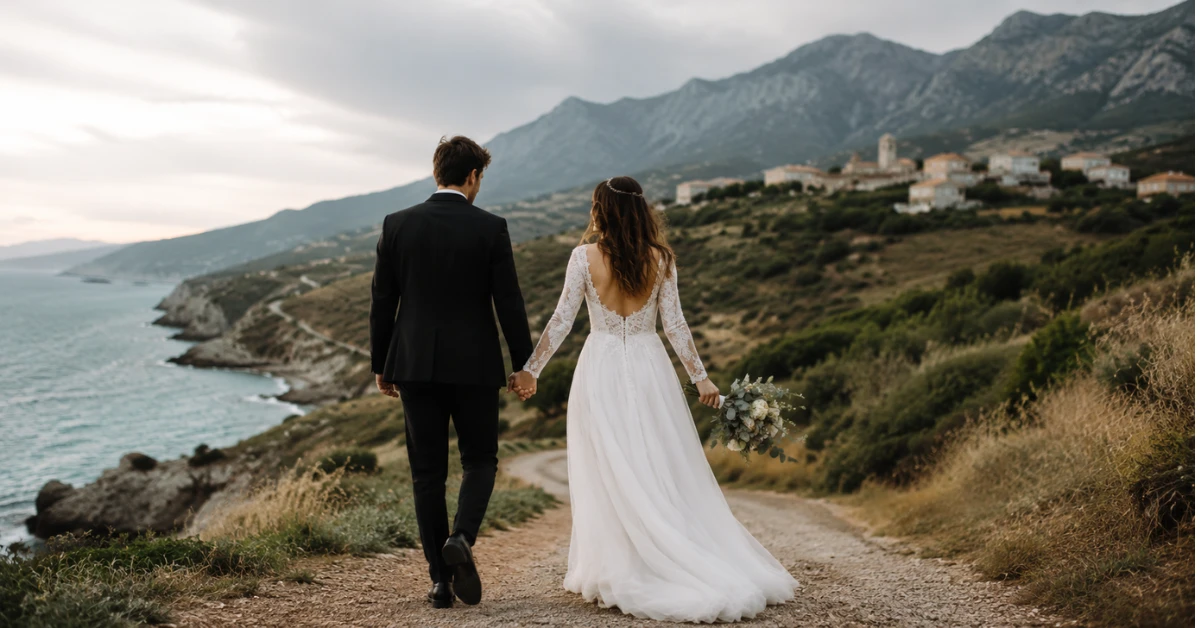
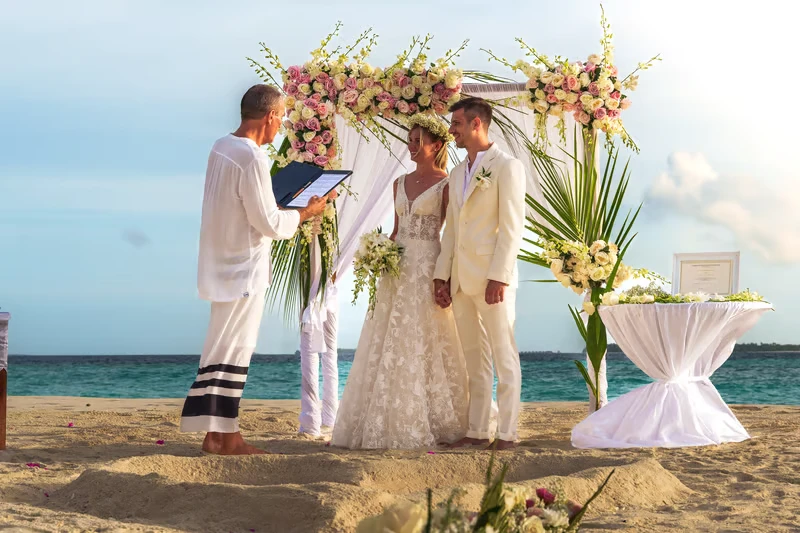
Speed and secrecy aren’t requirements anymore. A couple might elope on a hiking trail, inside a courthouse, on a remote beach, or across several days of travel together.
What stays consistent is the priority. Eloping puts the relationship at the center, instead of putting the event itself in the spotlight.
Elope vs. Elopement vs. Eloping
These three related words trip people up constantly, but the difference is straightforward.
Elope (The Verb)
Elope describes the action a couple takes. Example: “They plan to elope this fall instead of hosting a big wedding.”
Elopement (The Noun)
Elopement names the event itself. Example: “Their elopement happened at sunrise on a quiet trail.” Meanwhile, eloping is just the verb’s present-tense form, working the same way “traveling” or “celebrating” would.
Other Meanings of “Elopement” (Beyond Weddings)
Wedding context isn’t the only place this word shows up. Elopement also has a completely different, non-romantic use.
In healthcare settings, “elopement” refers to a patient, resident, or person in care leaving a facility unsupervised and without authorization. This clinical meaning is unrelated to marriage and is common terminology in hospitals and care homes.
Elope Meaning in a Sentence
Context makes any definition easier to absorb. Here are a few practical examples:
“My cousin decided to elope rather than plan a traditional ceremony.” “They eloped quietly back in 1978, much to their parents’ surprise.” “Our elopement is set for early spring at a national park.”
Synonyms for Elope
Looking for other words for elope? These terms carry similar meaning: run off, secret marriage, intimate wedding, courthouse wedding, small destination wedding, and runaway wedding.
Why Do People Elope?
There are several down-to-earth reasons couples choose this route.
Reduced stress tops the list. A large wedding demands guest coordination, venue logistics, and months of planning. Eloping cuts most of that workload.
Budget control is another factor. With fewer guests to host, couples often redirect funds toward travel or experiences instead of catering and decorations.
Freedom of choice matters as well. Couples can pick any date, location, or style without juggling other people’s availability or expectations.
Privacy drives many decisions too. Some couples prefer to keep their vows personal, shared only between themselves in the moment.
Elopement vs. Micro Wedding vs. Traditional Wedding
These three wedding formats often get confused, so here’s a clear breakdown.
A traditional wedding generally hosts over 100 guests, follows a formal structure, and centers heavily around entertaining attendees.
A micro wedding falls in between, usually featuring 10 to 75 guests with a shorter, simplified ceremony and reception.
An elopement stays the smallest and most personal of the three, often limited to the couple plus a handful of loved ones, with no set rules on size or format.
Is Eloping Legal in the USA?
Yes, eloping is fully legal throughout the United States. Couples still need a valid marriage license, exactly as they would for a traditional wedding.
Legal requirements shift from state to state. Some states require an officiant and witnesses, while others, such as Colorado, permit self-solemnization, meaning the couple can legally marry themselves without an officiant present.