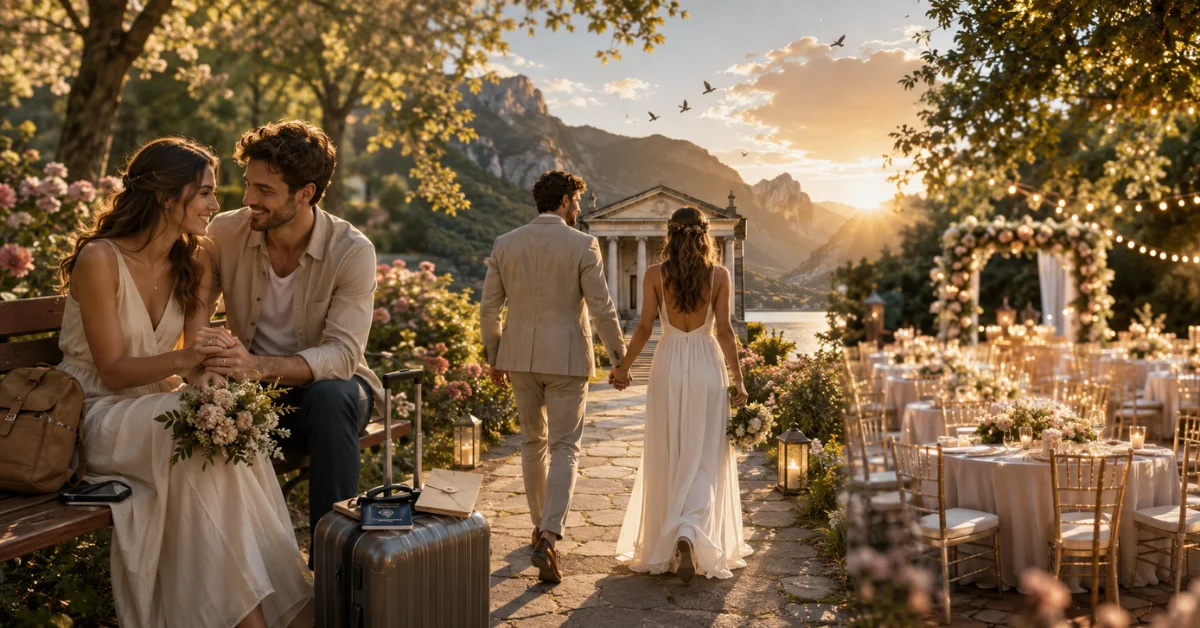
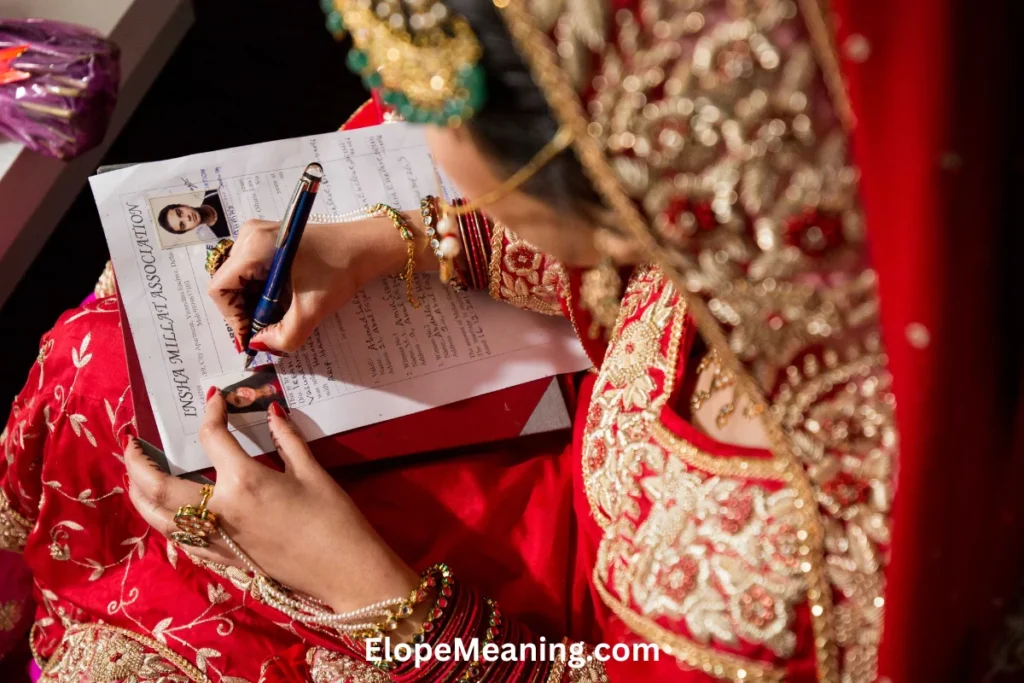
You’ve heard the word “elope” your whole life. But what does it actually mean today? It’s not running away in secret anymore. It’s choosing a wedding that’s smaller, simpler, and more you.
The dictionary defines elope as running away to get married, usually without telling anyone. That’s the old meaning. Today, eloping means something much warmer. It’s a couple choosing a small, intentional wedding instead of a big, traditional one. There’s no secrecy needed. No parents to hide it from. It’s simply a different way to say “I do.”
The word itself comes from old legal language about running off together. Over time, the meaning softened. Now it just points to intimacy over size.
What Does Elope Mean in a Relationship?
what-does-elope-mean-in-a-relationship
In a relationship, eloping is an emotional decision before it’s a logistical one. It means two people choosing each other over outside noise — family pressure, wedding trends, or what’s “expected.” Couples often elope when they want their wedding day to feel deeply personal, not performative.
This shows up in real life often. Maybe one partner hates being the center of attention. Maybe the couple values experiences over big parties. Maybe they’re blending families and want to avoid tension. Whatever the reason, elopement in a relationship usually means simplicity wins over spectacle.
What Does Elope Mean in Marriage?
what-does-elope-mean-in-marriage
Here’s the part many people get wrong. Eloping can absolutely be a real, legal marriage. It’s not a “lesser” version of a wedding. The size of the guest list has nothing to do with how official the marriage is.
A standard marriage license still applies. Couples sign it, get witnesses if their state requires one, and file it just like any other wedding. The difference is the ceremony itself. A traditional wedding usually means a big guest list, a long planning timeline, and a formal reception. An elopement strips that down to what matters: the vows, the commitment, and each other.
The word elope has old legal roots. Centuries ago, it described couples — often young — who ran off to marry without parental consent. Back then, marriage decisions were tightly controlled by families. Running away was sometimes the only option for couples in love but without approval.
That traditional meaning stuck around for generations. But marriage culture changed. Parental consent stopped being a legal barrier in most places. So the word elope slowly lost its rebellious edge. Today, it’s less about defiance and more about freedom of choice.
Why Do Couples Choose to Elope?
There’s no single reason couples decide to elope. But a few themes show up again and again.
Cost is a big one. Big weddings get expensive fast — venues, catering, flowers, and guest counts all add up. Eloping usually cuts that spending way down.
Privacy matters too. Some couples simply don’t want an audience for their vows. They want a quiet, personal moment, not a performance.
Stress reduction plays a role as well. Planning a large wedding can take a year or more. Eloping trims that timeline dramatically.
Adventure draws other couples in. Mountains, beaches, deserts — an elopement can happen almost anywhere, which opens the door to unforgettable settings a traditional venue can’t offer.
Family conflict is another honest reason. Blended families, strained relationships, or simply wanting to avoid drama can push couples toward a smaller day.
And some couples just want a destination wedding feel without the logistics of hosting guests overseas.
Types of Elopement and What Each One Means
types-of-elopement
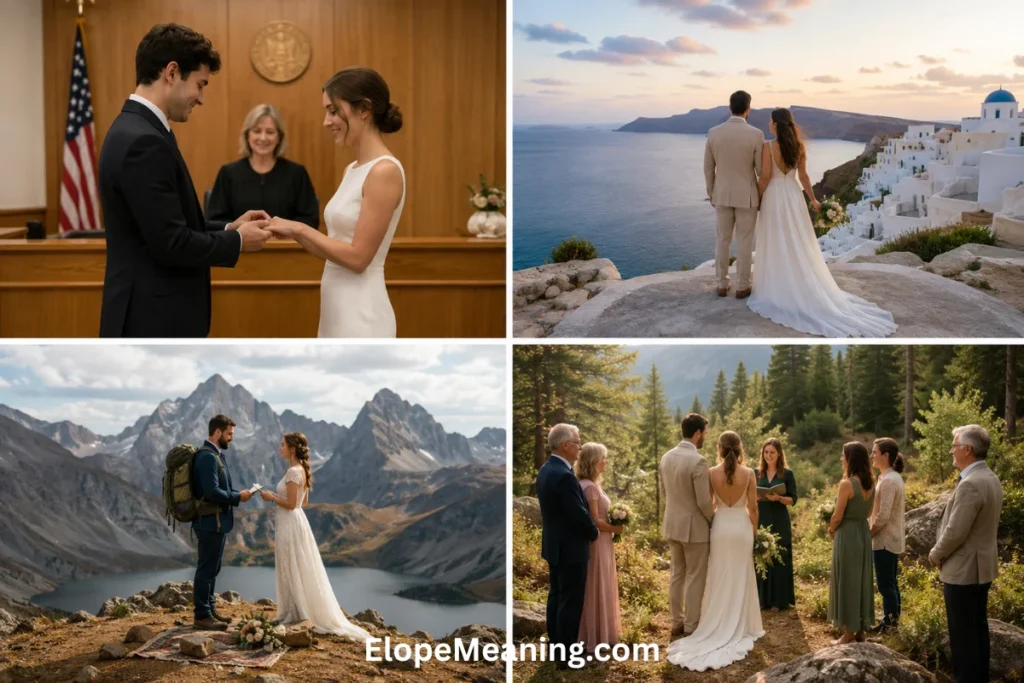
Not all elopements look the same. Here are the common styles.
A courthouse elopement is quick, simple, and usually handled by a local government office. It’s often the most affordable option.
A destination elopement means traveling somewhere meaningful — a country, a coastline, a mountain town — to say vows.
An adventure elopement blends the wedding with outdoor activity, like hiking to a scenic overlook before the ceremony.
An intimate elopement includes a small group of close family or friends, while still keeping things simple.
There’s no “correct” type. The right one depends on what the couple actually wants their day to feel like.
Elope vs Traditional Wedding: Key Differences
The biggest difference is scale. A traditional wedding often includes dozens or hundreds of guests. An elopement usually includes the couple, maybe a few loved ones, and sometimes a photographer.
Cost is another major gap. Traditional weddings involve venues, catering, and vendors that add up quickly. Eloping removes most of those expenses.
Timeline differs too. Big weddings can take a year of planning. Elopements can come together in weeks, sometimes days.
Emotional experience is the final difference. Traditional weddings focus on hosting guests. Elopements focus almost entirely on the couple’s connection to each other.
Is Eloping a Legally Binding Marriage?
is-eloping-a-legally-binding-marriage
Yes. Eloping is a real marriage as long as proper paperwork is filed. Couples still need a marriage license, and depending on the state, they may need an officiant or witnesses present.
Some U.S. states even allow self-solemnization, meaning couples can legally marry themselves without an officiant. Colorado is one well-known example. Rules vary from state to state, so it’s worth checking local requirements before the big day.
Common Myths About Eloping
There’s still confusion around what eloping really means. Let’s clear up a few myths.
“Eloping Isn’t a Real Wedding”
This isn’t true. An elopement is just as legally and emotionally valid as any traditional wedding.
“You Can’t Invite Anyone”
Couples can absolutely bring a few close family members or friends if they choose to.
“Eloping Means Running Away”
That’s the old definition. Modern elopements are usually planned, intentional, and far from secretive.
Conclusion
Eloping simply means choosing a marriage that feels honest to the couple, not to outside expectations. Whatever the reason behind it, an elopement is a real, meaningful way to say “I do.”
FAQ’s
What is elope in a relationship?
It means choosing a small, intentional wedding over a big traditional one to focus on the relationship itself.
What does elope mean as an adult?
It usually means making a personal, independent choice to marry simply, without family pressure or tradition.
Is getting eloped a real marriage?
Yes, an elopement is a legally valid marriage once the proper marriage license is filed.
Is it romantic to elope?
Yes, many couples find eloping more romantic because it centers fully on their connection, not guests.
Why do couples elope together?
Common reasons include lower cost, less stress, more privacy, and a desire for adventure.
What is eloped love?
It refers to the deep, personal commitment couples express through a private, intimate wedding ceremony.
Ethan Parker is a content editor researching spiritual meanings, biblical symbolism, superstitions, and dream interpretations, delivering clear, accurate, and easy-to-understand explanations for readers.