When a child suddenly runs off campus or slips out of class, parents often hear one confusing word: elopement. This guide breaks down exactly what that means and what to do next.
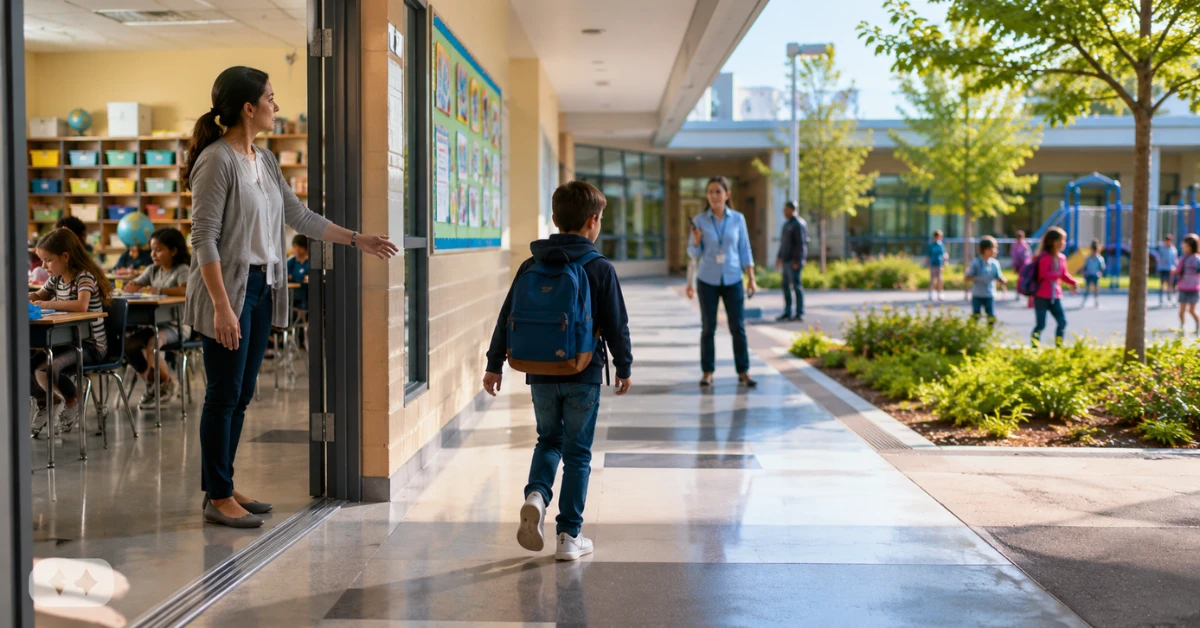
In a school setting, elopement means a student leaves a safe, supervised area without permission and without an adult knowing where they went. This is very different from the everyday meaning of “elope,” which usually refers to running away to get married.
Quick definition: School elopement is when a student exits a classroom, playground, or campus boundary without staff awareness or consent.
Teachers and special education staff use this term to describe a safety behavior, not a discipline issue. It’s tracked closely because it can put a child at real risk in just seconds.
What Does Eloping Mean in SPED?
In special education (SPED), eloping is treated as a behavioral pattern that schools must document and respond to formally. It often shows up in a student’s IEP (Individualized Education Program) or 504 plan as a target behavior.
SPED teams usually link elopement to a deeper need, such as escaping a task or seeking sensory input. This is why a Functional Behavioral Assessment (FBA) is often the first step before building any support plan.
What Does School Elopement Look Like?
what-does-school-elopement-look-like
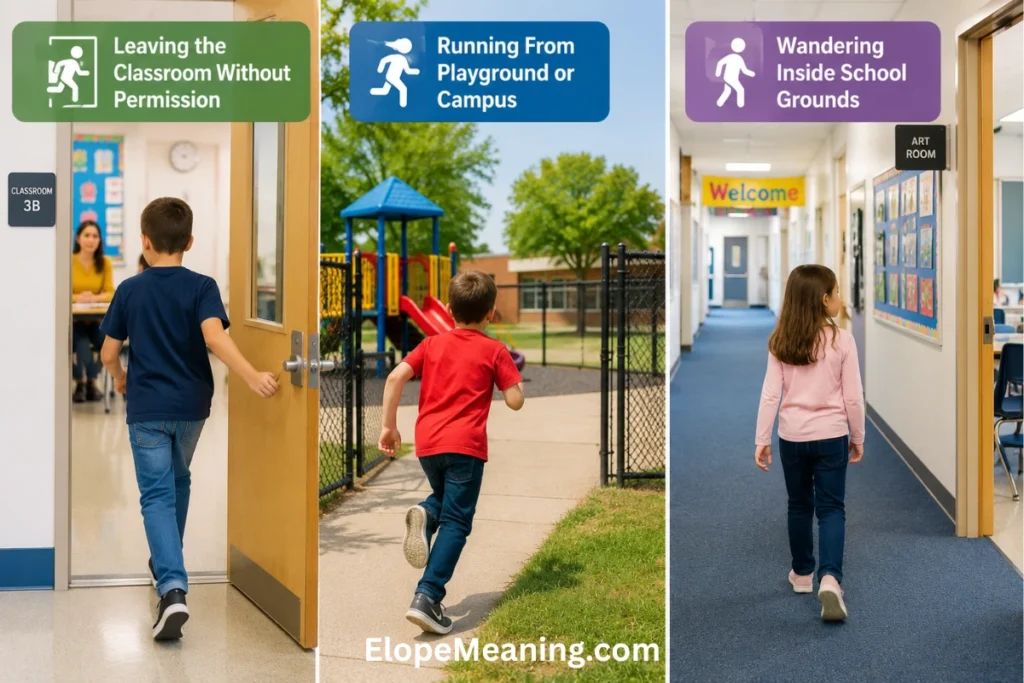
Elopement doesn’t always look dramatic. Sometimes it’s quiet and quick, which makes it harder to catch in the moment.
Leaving the Classroom Without Permission
A student might slip into the hallway, head to another room, or simply walk out the door while the teacher’s back is turned. Even short absences count as elopement if no one approved the movement.
Running From Playground or Campus
This is the most serious form. A child crosses a fence, slips through a gate, or leaves school grounds entirely, often during recess or outdoor time.
Wandering Inside School Grounds
Some students stay on campus but move beyond their assigned zone, like wandering into another classroom or hallway without checking in first.
Elopement is almost always a form of communication, not defiance. A child is usually trying to escape something or get something they need.
Sensory Overload & Overstimulation
Loud bells, crowded hallways, and bright lights can overwhelm a child’s nervous system. Running away can feel like the only way to find relief.
Anxiety, Stress, or Trauma Triggers
A stressful test, a conflict with a peer, or a triggering memory can push a student toward fight-or-flight mode, leading them to bolt.
Autism, ADHD & Other Developmental Conditions
Children with autism spectrum disorder (ASD) and ADHD are statistically more likely to elope. Research from the Kennedy Krieger Institute found that nearly half of children with autism attempt to wander or bolt from safe settings at some point.
Elopement vs Truancy: Is It a Crime to Skip School?
These two behaviors look similar but are legally very different. Truancy is intentional, repeated absence from school, usually tracked by attendance records. Elopement is an unplanned, in-the-moment exit tied to a behavioral or emotional trigger.
Behavior
Definition
Legal Treatment
Elopement
Sudden, unplanned exit from a supervised space
Treated as a safety/behavior issue, not a crime
Truancy
Repeated, intentional absence from school
Can lead to legal consequences for parents in some states
Why Is School Elopement a Safety Concern?
Even a few unsupervised minutes can turn dangerous. This is why schools treat every elopement incident seriously, no matter how brief.
Traffic & Environmental Hazards
A child near a parking lot, busy street, or construction zone faces real physical danger within seconds of leaving a supervised area.
Risk of Getting Lost
Younger children or those with communication challenges may not know how to ask for help once they’re off campus, increasing the risk of becoming lost.
Emergency Response Challenges
Every minute matters. Schools without a clear protocol can lose valuable time figuring out who’s missing, where they went, and who should respond.
How Schools Prevent Student Elopement
how-schools-prevent-student-elopement
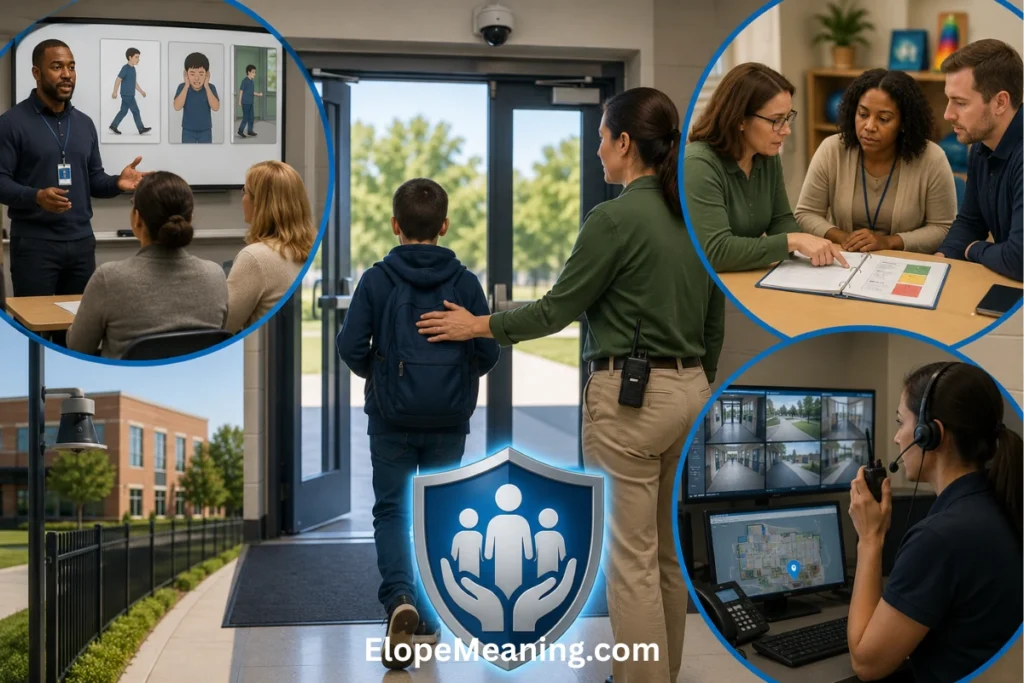
Strong elopement prevention combines structure, supervision, and individualized planning.
Supervision & Staff Training
Staff are trained to recognize early warning signs, like pacing, covering ears, or heading toward exits, before a student actually leaves.
Safety Plans, IEP & Behavior Supports
A written Behavior Intervention Plan (BIP) outlines triggers, replacement behaviors, and exact steps staff should follow if elopement happens again.
Staff Communication Protocols
Clear communication, such as radios or alert systems, ensures the right people know immediately when a student is missing.
Prevention Strategy
Purpose
Door alarms & secured exits
Block unsupervised exits in high-risk zones
Visual schedules
Reduce anxiety through predictability
1:1 aide support
Provide close supervision for high-risk students
Calm-down spaces
Offer a safe outlet instead of running
Staff training
Ensure fast, consistent response
What Parents Should Do If Their Child Elopes at School
Parents play a critical role in reducing future elopement risk, both at home and through the school’s formal process.
Work With the School Team
Request a meeting right away. Ask exactly what happened, when, and what steps the school is taking to prevent it from happening again.
Review or Update the IEP/Safety Plan
If your child has an IEP or 504 plan, push to have elopement risk written into it clearly, including notification timelines and safety protocols.
Track Triggers & Monitor Progress
Keep a simple log of when elopement happens at home or school. Patterns often reveal the real trigger behind the behavior.
FAQs
What does elope mean in IEP?
In an IEP, elopement refers to a documented behavior where a student leaves a supervised space without permission, often tied to a specific support goal.
Why do kids elope from school?
Kids usually elope to escape overwhelming situations, sensory triggers, or stress, or to seek something they need, like quiet space.
What does eloping mean sped?
In special education, eloping means a tracked safety behavior addressed through an FBA, BIP, or formal IEP goal.
Is eloping ADHD or autism?
Eloping is common in both ADHD and autism, but it can also occur in children with anxiety or other developmental conditions.
Is it a crime for a kid to skip school?
No, elopement itself isn’t a crime, but repeated unexcused absences, or truancy, can lead to legal consequences for parents in some states.
Conclusion
School elopement is a safety behavior, not bad behavior, and it almost always points to an unmet need. With the right plan, training, and communication, schools and parents can work together to keep every student safe.
Ethan Parker is a content editor researching spiritual meanings, biblical symbolism, superstitions, and dream interpretations, delivering clear, accurate, and easy-to-understand explanations for readers.