Elopement is one of the most serious patient safety risks inside hospitals and nursing homes. It happens fast, often silently, and the outcome can be life-threatening. This guide breaks down what elopement really means in medical care, who is at risk, and how facilities stop it before it turns deadly.
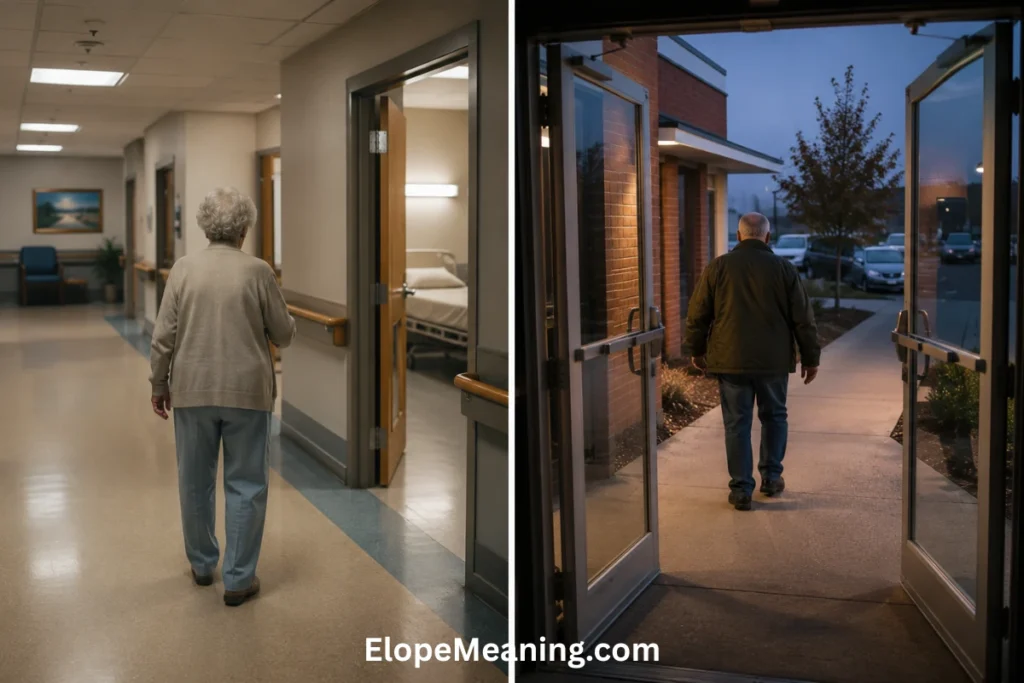
In healthcare, elopement means a patient leaves a hospital, nursing home, or care facility without permission or proper discharge. The Joint Commission, which sets safety standards for U.S. hospitals, calls this an unauthorized departure from a staffed, around-the-clock care setting.
“Elopement is an unauthorized departure of a patient from a staffed around-the-clock care setting, leading to death, permanent harm, or severe temporary harm.”
This makes medical elopement a sentinel event — the most serious category of safety incident a hospital can report. It’s not the same as a normal discharge. The patient simply walks out, and staff often don’t notice right away.
Elopement vs Wandering: What’s the Difference?
elopement-vs-wandering
Wandering and elopement are related, but they’re not identical.
Wandering happens inside the facility. A confused patient walks around, enters the wrong room, or paces a hallway without purpose.
Elopement happens when that wandering crosses a line — the patient actually exits the building or grounds. Unsupervised wandering is often the first warning sign that elopement could follow.
Think of wandering as the risk behavior and elopement as the outcome when that behavior goes unmanaged.
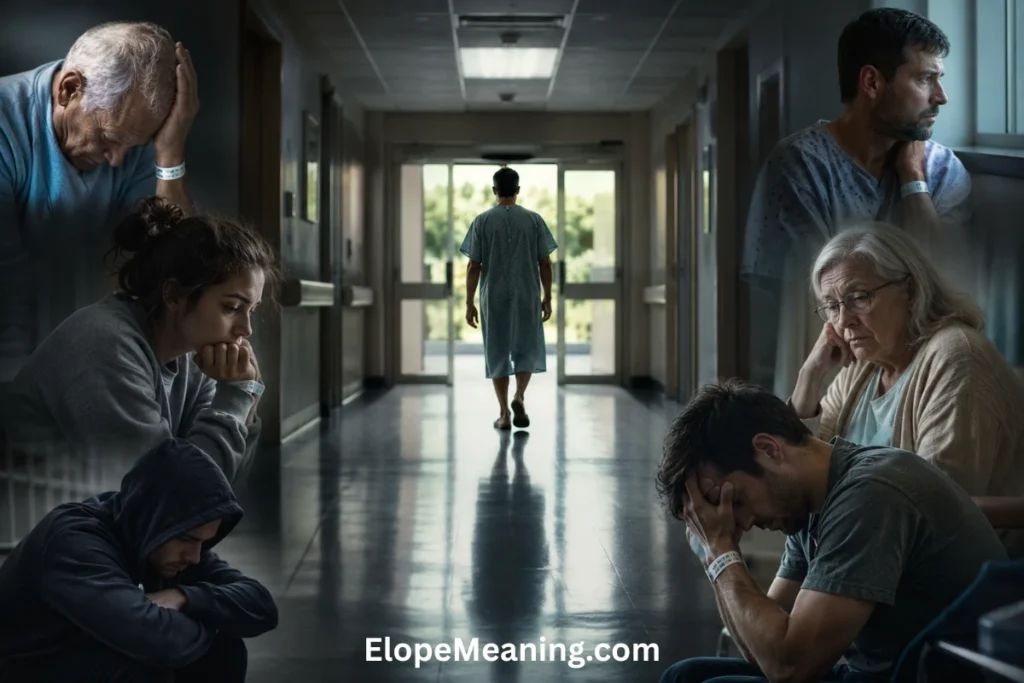
Patients rarely elope without a reason, even if that reason makes no sense to staff. Two of the most common triggers for elopement are:
Confusion or disorientation — caused by dementia, delirium, medication side effects, or unfamiliar surroundings. The patient may believe they need to “go home” or complete a task that no longer applies.
Unmet needs — hunger, thirst, pain, boredom, or anxiety can push a patient to leave in search of relief, comfort, or a familiar face.
Other frequent causes include:
Sudden changes in medication or sedation levels
Drug or alcohol withdrawal
Psychotic episodes or severe agitation
A prior history of leaving against medical advice
Sleep disturbances that cause nighttime wandering
Who Is at Risk of Elopement?
who-is-at-risk-of-elopement
Some patients face a far higher elopement risk than others. Facilities are expected to screen for these groups on admission.
Dementia and Alzheimer’s Patients
Most elopement cases involve older adults with dementia or Alzheimer’s disease. These patients often act on instinct — trying to reach a home, spouse, or job that exists only in memory. Their cognitive impairment means they can’t recognize danger once they’re outside.
Psychiatric and Behavioral Health Patients
Patients on psychiatric units, especially those held involuntarily, are at high risk. Distress, fear of treatment, or a desire to avoid confinement can drive a sudden attempt to leave.
Children with Autism or ADHD
Pediatric elopement is a real and growing concern. Kids with autism may bolt from a setting due to sensory overload, while ADHD-related impulsivity can cause sudden, unplanned departures — even in a hospital hallway.
Warning Signs of Elopement Risk
Staff are trained to watch for specific red flags before elopement happens:
Repeated questions about leaving or going home
Pacing near exits or testing doors
Removing an ID bracelet or monitoring device
Sudden withdrawal or unusual calmness after agitation
A documented history of past elopement attempts
Spotting these signs early gives staff time to intervene before a patient actually disappears.
Dangers and Consequences of Patient Elopement
Once a patient leaves unsupervised, the risks multiply quickly. The table below shows what can go wrong.
Risk Factor
Possible Outcome
Extreme weather exposure
Hypothermia, heatstroke
Missed medication or treatment
Medical complications, organ stress
Traffic or unfamiliar terrain
Falls, fractures, fatal accidents
Bodies of water nearby
Drowning
Prolonged time missing
Dehydration, malnutrition
These aren’t rare hypotheticals. Documented cases include patients found in retention ponds, on rooftops, and in construction sites after eloping — some resulting in wrongful death claims against the facility.
How Healthcare Facilities Prevent Elopement
Elopement prevention depends on a layered system, not a single fix. Effective programs combine:
Risk assessment at admission and throughout the stay — every patient should be screened, not just those who “look confused.”
Environmental safeguards — locked units, alarmed doors, window restrictions, and clearly marked exits that trigger alerts.
Technology — wander-alert bracelets, video surveillance, and electronic tracking devices for high-risk patients.
Redirection activities — social interaction, supervised walks, or simple engagement that reduces the urge to leave.
Staff training — every team member should know the warning signs and the exact protocol to follow if a patient goes missing.
What Happens After a Patient Elopes?
what-happens-after-a-patient-elopes
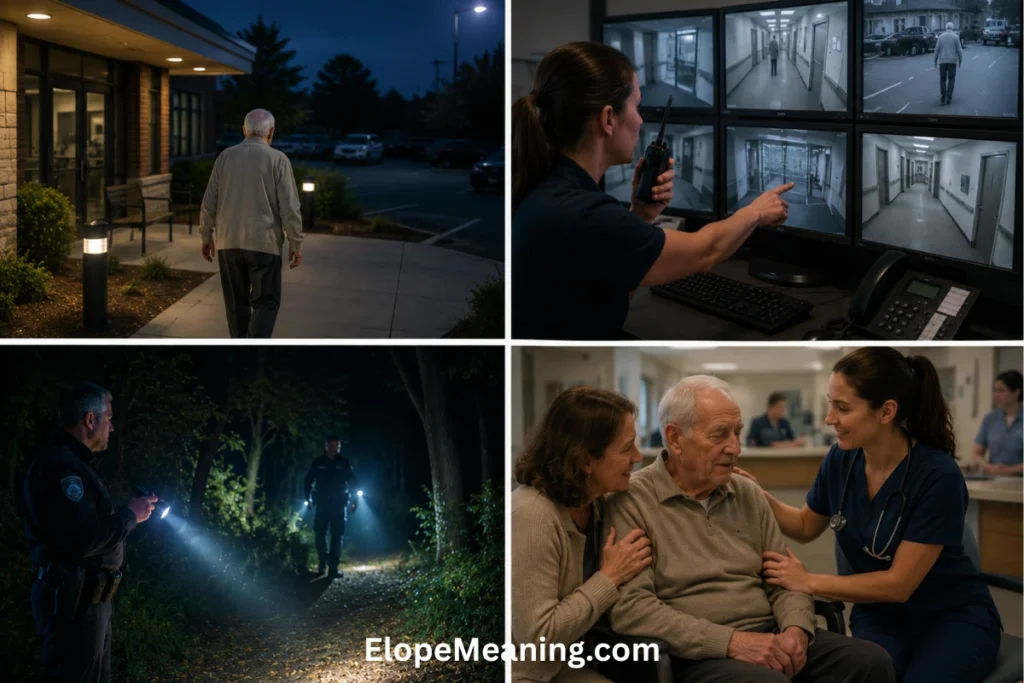
When elopement occurs, facilities should follow a clear incident response protocol:
First, staff confirm the patient is actually missing and not simply in another area. Next, they notify the unit supervisor, security, and the patient’s physician immediately.
A facility-wide search begins, often including nearby grounds, stairwells, and parking areas. If the patient isn’t found quickly, the family and local law enforcement are contacted.
Afterward, the facility documents the event and reviews what failed — whether it was a missed risk assessment, a broken alarm, or a staffing gap — to prevent it from happening again.
FAQ’s
What Is Elopement in Mental Health?
It’s when a psychiatric patient leaves a treatment facility without permission or proper discharge.
What Happens If a Patient Elopes?
Staff launch an immediate search, notify family and authorities if needed, and document the incident for review.
What Does Elopement Mean in Dementia?
It means a dementia patient wanders away from a facility and exits without staff awareness, often unable to recognize the danger.
Is Eloping ADHD or Autism?
Both conditions can cause elopement; autism often involves sensory-driven bolting, while ADHD-related elopement is usually impulsive.
What Is the 3 Month Rule in Mental Health?
It generally refers to a review period after which a patient’s psychiatric hold or treatment plan must be reassessed.
What Are Two Triggers for Elopement?
Confusion or disorientation, and unmet physical or emotional needs are two of the most common triggers.
Conclusion
Medical elopement is a preventable tragedy when facilities take risk assessment and supervision seriously. Recognizing the warning signs early remains the strongest defense against this life-threatening event.
Ethan Parker is a content editor researching spiritual meanings, biblical symbolism, superstitions, and dream interpretations, delivering clear, accurate, and easy-to-understand explanations for readers.